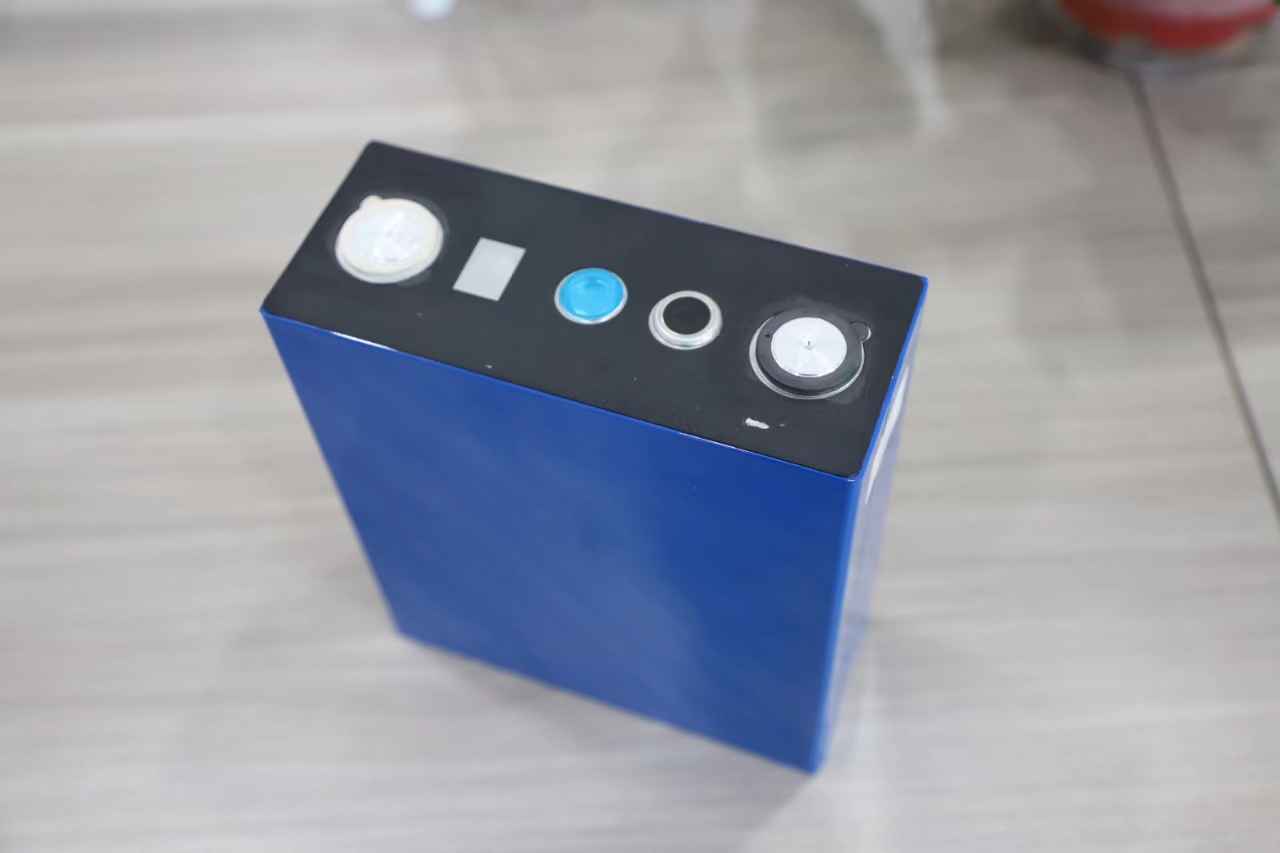
A rechargeable lithium-ion battery is made of one or more power-generating compartments called cells. Each cell has essentially three components: a positive electrode (connected to the battery's positive or + terminal), a negative electrode (connected to the negative or − terminal), and a chemical called an electrolyte in between them. The positive electrode is typically made from a chemical compound called lithium-cobalt oxide (LiCoO2—often pronounced "lyco O2") or, in newer batteries, from lithium iron phosphate (LiFePO4). The negative electrode is generally made from carbon (graphite) and the electrolyte varies from one type of battery to another—but isn't too important in understanding the basic idea of how the battery works.
All lithium-ion batteries work in broadly the same way. When the battery is charging up, the lithium-cobalt oxide, positive electrode gives up some of its lithium ions, which move through the electrolyte to the negative, graphite electrode and remain there. The battery takes in and stores energy during this process. When the battery is discharging, the lithium ions move back across the electrolyte to the positive electrode, producing the energy that powers the battery. In both cases, electrons flow in the opposite direction to the ions around the outer circuit. Electrons do not flow through the electrolyte: it's effectively an insulating barrier, so far as electrons are concerned.